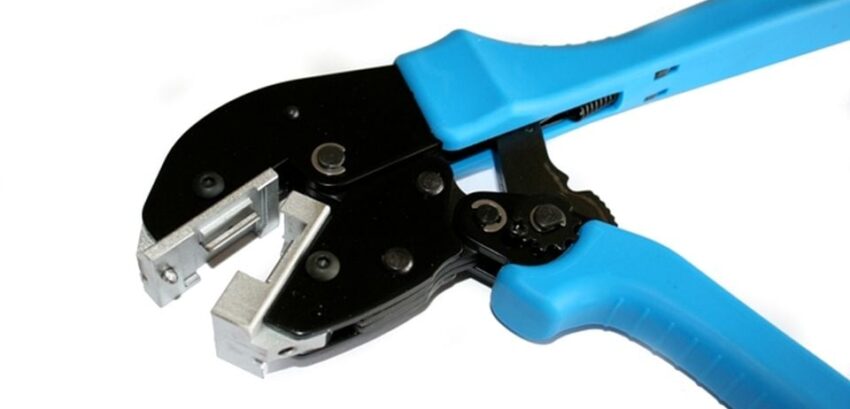
Discover why an HDMI crimper is essential for professional-grade custom cable connections. Learn expert techniques and elevate your AV setup today.
Why an HDMI Crimper Is the Key to Professional-Grade Custom Cable Connections
When signal quality matters — in a home theater, a studio rack, or a high-end AV setup — the connection point between cable and connector is where performance is either secured or lost. A reliable HDMI crimper tool for custom builds ensures that each termination is mechanically stable and electrically consistent, rather than depending on the compromises built into mass-produced, fixed-length cables. Custom cable assembly gives the installer direct control over cable length, routing, and material selection — variables that directly affect signal integrity in demanding setups. The difference between a properly crimped connector and a poorly fitted one can surface as intermittent signal drops, handshake errors, or image degradation at higher resolutions.
Pre-terminated cables designed for retail are built around average use cases, which rarely match the specific geometry of a custom rack or a dedicated listening room. Crimping your own HDMI connections allows each cable run to follow the actual installation path, eliminating unnecessary slack and reducing mechanical stress on connectors. Beyond the practical benefits, a well-executed crimped termination reflects the attention to detail that separates a professionally finished installation from a merely functional one. For enthusiasts who invest seriously in their source components and displays, the cabling infrastructure deserves that same level of precision.
How Kácsa Audió Brings Expert Cable Assembly and Testing to Your Home System
Kácsa Audió occupies a distinctive position in the cable supply chain: rather than simply fulfilling orders, the company offers hands-on guidance, in-house assembly, and rigorous testing as part of its core service. This means customers aren’t just purchasing a product — they’re working with specialists who understand how cable characteristics interact with real-world system components. Whether a client needs a standard configuration or a fully custom run built to precise specifications, the process involves direct consultation rather than a generic catalog selection. The company sources materials with care, and that commitment carries through to every stage of assembly.
One of the more practical aspects of Kácsa Audió’s service model is the option to test assembled cables in your own system before committing to a purchase. This removes one of the persistent frustrations in high-end cable shopping: the gap between manufacturer specifications and actual in-system performance. Customers can evaluate how a cable behaves with their specific amplifiers, displays, and source components under real listening and viewing conditions. It’s a straightforward policy, but one that reflects genuine confidence in the products being assembled.
Choosing the Right HDMI Crimping Tools and Techniques: What Every Enthusiast Should Know
Not all crimping tools are created equal, and the choice of tool directly affects the reliability of the finished connector. A dedicated HDMI crimper designed specifically for HDMI-M connectors — such as the KCS-HDMI model — ensures that the crimping force and geometry are calibrated to the connector’s tolerances, rather than approximated with a general-purpose tool. Compatibility with standard-sized HDMI connector heads is a baseline requirement, but the mechanical precision of the crimp itself determines whether the connection will hold under repeated cable flexion and thermal cycling. For anyone assembling cables intended to last, a purpose-built tool is the practical choice.
Technique matters as much as tooling. Even with a quality HDMI crimper in hand, consistent results depend on correct cable preparation: trimming the shield, insulation, and conductors to the right lengths before seating the connector. A poorly prepared cable end will produce an unreliable termination regardless of how well-engineered the tool is. Many experienced assemblers recommend working through a small batch of practice terminations on scrap cable before moving to final installations — a low-cost way to develop the muscle memory and visual calibration that consistent results require.
The Future of Custom HDMI Cabling: Trends Shaping High-Fidelity Audio and Video Installations
As display technology pushes into higher resolutions and refresh rates, the electrical demands placed on HDMI cables continue to increase. Modern 4K and 8K content at high frame rates requires cables that maintain signal integrity across longer runs and tighter routing constraints than earlier standards demanded. This shift has made custom cable assembly more relevant, not less — because off-the-shelf solutions are increasingly unable to address the specific bandwidth and attenuation requirements of high-performance installations. The ability to specify cable geometry, shielding, and conductor quality gives custom builders a meaningful advantage in these environments.
The enthusiast community has also become more sophisticated in its understanding of cable physics, moving away from subjective impressions toward measurable performance criteria. Tools like time-domain reflectometry and signal analyzers are now accessible at the hobbyist level, making it possible to verify that a custom-assembled cable actually performs as intended. This trend rewards precision assembly and quality materials over marketing claims — an environment where purpose-built tools and expert guidance produce objectively better outcomes.