Home studio users, podcasters and hi-fi builders often need a balanced XLR cable for long runs. Here is how build quality, shielding, connectors and length shape price and performance.
What Determines the Quality and Cost of an XLR Cable, and What to Look for in a Buying Guide
A DAC sitting a meter from a power amplifier and a microphone line crossing a rehearsal room have little in common, yet both usually rely on the same three-pin balanced connection. The design carries the signal on two conductors in opposite polarity plus a ground, so noise picked up along the way cancels out at the receiving end. That is why a well-made XLR cable remains the standard choice for long runs as well as short hi-fi links. The locking latch on the connector adds mechanical security, which matters wherever a lead may be tugged or moved.
Price differences between balanced cables usually trace back to a few physical decisions: conductor material and purity, shielding, insulation, geometry, and the build of the connector body. The KáCsa KCO-IS1X, for example, uses UP-OCC mono-crystal copper of 6N purity. The Neotech NEI-3001G takes a different route, with a four-conductor construction and double shielding of aluminum-Mylar foil and copper braid. A cable’s looks reveal nothing about how it performs, so a listing that spells out these details is more useful than a glossy jacket. Entry series such as the KCO-IS1 and IS2 suit mid-level systems, while the KCO-RTC and KCS-XLR lines use more refined materials for demanding high-end setups.
Practical Rules, Tips and Pitfalls When Choosing Cable Length, Connectors and Features
Start by measuring the real path from socket to socket, including the bend behind the rack, and then add a little slack. A lead that is too short strains the connectors, while one that is too long leaves a coil of excess cable that gathers clutter. Ready-made pairs commonly come in lengths such as 0.5, 1, 1.5 or 2 meters, which covers most hi-fi racks. Also check whether a listing is for a stereo pair, meaning one cable per channel, so you order the right quantity.
Connector details cause more mistakes than most buyers expect. Outputs normally take male plugs and inputs female ones, and gear with TRS or jack sockets needs an XLR-to-TRS cable or adapter instead of a standard lead. Digital AES/EBU leads with 110 ohm impedance look nearly identical to analog ones but are made for a different job. DMX lighting leads differ in impedance too, so they should not stand in for audio leads. Gold-plated contacts, a sturdy metal shell and a flexible strain relief are the features that tend to matter after years of plugging and unplugging.
How Market Needs and Trends Are Changing Studio, Stage and Home Audio Cabling
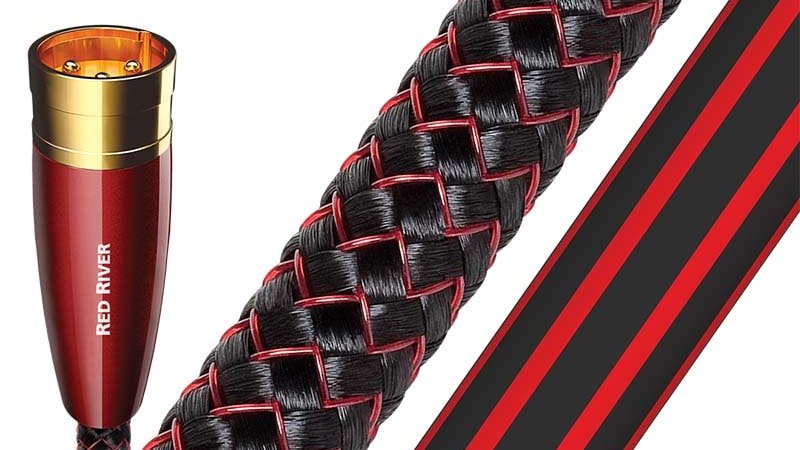
Home studios are where an XLR cable now turns up most often. Podcasters, streamers and hobby musicians are replacing plug-and-play USB microphones with XLR microphones and external audio interfaces, which also means phantom power for condenser mics travels over the same lead. Many of these users want shorter, flexible runs sized for desk boom arms, so no loose bundle of cable ends up on the work surface. Braided textile jackets have also gained ground over plain rubber or PVC, since they tangle less and resist wear better.
Buyers have also grown more skeptical of vague promises of magic. The questions people ask now are practical: how solid the soldering is, which connectors are fitted, how effective the shielding is, and whether the conductor is oxygen-free copper (OFC). In hi-fi, more amplifiers and DACs offer balanced inputs, so the choice between balanced and unbalanced connections comes up more often than it used to. That shift favors sellers who explain what is inside a cable and let customers check the result themselves.
How KáCsa Audio Builds Custom Cables for Your System and Lets You Test Them at Home
Specifications only go so far, and the real test is how a lead behaves in your own rack. Every cable that leaves the KáCsa Audio workshop is cut and terminated to the length and connectors the buyer specifies, and every assembled cable the shop sells can go home for a trial run in the buyer’s own system, with no purchase expected. The shop itself is at Rádió utca 1., in the 16th district of Budapest. It also has a listening room where cables can be compared using your own music.
The workshop makes cables with special connectors and non-standard lengths that large manufacturers do not offer. Someone who needs a 0.7-meter XLR cable fitted with a particular connector, for instance, can describe the setup and have it built to match. Damaged leads can often be repaired, and worn or old connectors can be replaced instead of discarding the whole cable. Knowing the equipment involved and the distance to cover is enough to start the conversation.