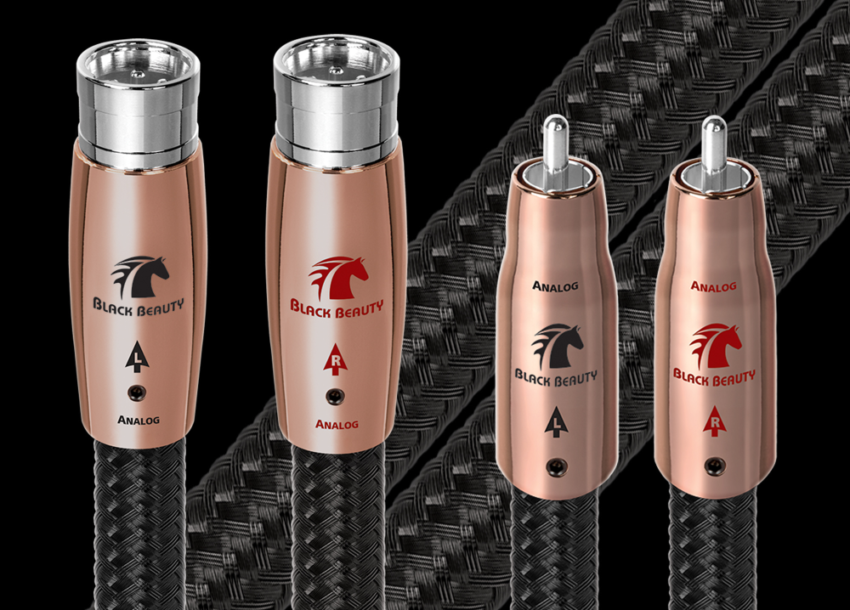
Discover why XLR cables are the gold standard for audio. Learn how balanced connections reduce noise, improve sound quality, and why Kácsa Audió’s custom solutions matter.
Why the XLR Cable Is the Gold Standard for Professional and Home Audio Connections
Among analogue interconnect formats, a well-built XLR cable has earned its reputation through measurable technical advantages rather than convention. Its three-pin balanced design transmits two copies of the audio signal with opposite polarity; the receiving device then cancels out any noise the cable picks up along the route. This common-mode noise rejection is why balanced connections are standard in professional studios and broadcast environments. For home hi-fi, the same principle delivers a quieter background and a more accurate signal path, especially over runs longer than one meter.
The mechanical design contributes equally to its standing. The locking connector body clicks firmly into the socket, eliminating accidental disconnection in permanent installations — a practical advantage that RCA connections simply cannot match. XLR sockets are built to withstand thousands of insertion cycles while maintaining consistent contact pressure. Many modern preamplifiers, DACs, and integrated amplifiers now include balanced outputs as standard, precisely because the format offers the most noise-resilient analogue connection available.
How Kácsa Audió Delivers Custom XLR Cable Solutions Built Around Your System
Kácsa Audió takes a more hands-on approach than most cable retailers: the team assembles cables to individual customer specifications, tests each one in-house, and offers a home-trial option so buyers can evaluate the result in their own system before committing to a purchase. This means a customer can request a specific conductor material, connector type, and cable length tailored to their particular setup — rather than choosing the nearest available standard configuration. For audiophiles who have already invested in carefully matched components, that flexibility carries real practical weight.
The catalogue spans a wide range of construction approaches and price points, drawing on products from AudioQuest, Furutech, Neotech, and LessLoss alongside the brand’s own lines. Entry-level options use UP-OCC mono-crystal copper conductors, while higher-tier models introduce graphene-enhanced conductors, pure silver geometry, and advanced multi-layer shielding. Technical guidance on conductor materials, connector choices, and system compatibility is part of the Kácsa Audió service — not an optional extra.
Choosing the Right XLR Cable: Key Factors Every Audiophile Should Consider
The cost of an audio interconnect is shaped by several technical variables, and understanding them makes selection more rational. Conductor material is among the most influential: standard OFC copper, UP-OCC mono-crystal copper — where the crystal structure runs continuously along the conductor with no grain boundaries to interrupt the signal — and pure silver each have different resistivity and transmission characteristics. Shielding design, whether a single braid, foil-and-braid combination, or multi-layer construction, determines how effectively a cable rejects interference from nearby mains cables and digital components. Geometry, meaning the physical arrangement of the conductors relative to each other, also affects self-induced noise within the cable itself.
For a mid-level stereo system, an entry-level UP-OCC XLR cable already represents a measurable improvement over a generic analogue interconnect. In higher-resolution systems, cables with graphene-enhanced conductors or pure silver geometry reveal further reductions in noise floor and improvements in spatial detail — but only when the source and amplification chain can actually resolve those differences. Connector quality plays a consistent role regardless of tier: precisely machined, gold or silver-plated XLR heads maintain contact integrity reliably over time. The practical principle is straightforward: cable tier should reflect system resolution.
The Future of Balanced Audio: Trends Shaping XLR Cable Technology and Hi-Fi Expectations
Advanced conductor treatments are steadily moving from professional studios into the wider consumer hi-fi market. Graphene-doped copper conductors, where a graphene coating reduces surface resistance and electromagnetic interference, now appear in mid-range products from manufacturers like Neotech rather than only in reference-tier designs. Similarly, Ohno Continuous Casting technology — which produces a mono-crystal conductor with no grain boundaries along its entire length — has become accessible across a broader segment of the market than it occupied even a few years ago.
Home listeners are also becoming more aware of how a well-matched XLR cable fits into the full signal chain. As high-resolution digital playback grows more common, the analogue output stage — particularly the interconnect between DAC and amplifier — increasingly shapes the final character of the sound. This shift in listening habits means cable selection is no longer an afterthought reserved for experienced audiophiles; it is a practical consideration for anyone building a system around balanced components.